
Keynote Speakers

Prof. Dr Eva Millesi is a behavioural biologist at the University of Vienna whose research explores the physiology, behaviour, and life-history strategies of small mammals. She is internationally recognised for her work on hibernation, seasonal adaptations, and behavioural endocrinology, particularly in ground squirrels and hamsters. Her research has advanced the understanding of how small mammals adapt to changing environments and environmental stress.
Over the past decades, beginning with her first postdoctoral project, she has investigated the behavioural and physiological adaptations of European ground squirrels and, later, common hamsters. Her research combines long-term field studies with field experiments and controlled studies conducted in semi-natural enclosures and environmental chambers. By comparing these two species, she has gained valuable insights into reproductive strategies, the timing of seasonal processes, and energy accumulation before winter in both fat-storing and food-storing hibernators. This work has helped identify critical phases in the annual cycle and key physiological constraints that influence reproduction and survival. Another major focus of her research is social behaviour, as well as behavioural and physiological stress responses in a range of small mammal species.

Prof. Dr Hendrik Schoukens is Professor of Environmental Law at Ghent University and attorney-at-law at the Brussels Bar with over fifteen years of professional experience in environmental, biodiversity and planning law. Combines academic expertise with extensive legal practice, advising public authorities, NGOs and private stakeholders on complex environmental and administrative law matters. Since 2018 also serves as Alderman responsible for Environment, Spatial Planning and Sustainable Development, providing practical experience in environmental governance, land-use planning and policy implementation. Regularly provides expert advice to national and international institutions on EU environmental legislation and litigation.
Internationally recognised scholar in EU environmental and biodiversity law, with more than 150 scientific publications, including peer-reviewed journal articles, book chapters and edited volumes. Current research focuses on the implementation of the EU Nature Restoration Regulation, biodiversity governance, climate litigation, ecosystem restoration and the Rights of Nature. Editor of The Right to a Healthy Environment in and beyond the Anthropocene (Edward Elgar, 2024) and Rights of Nature in Europe (Routledge, 2024). Principal investigator or contributor to several international research projects. Regular keynote speaker at international conferences and lecturer in EU Environmental Law, Nature Conservation Law and Environmental Governance.

Prof. Dr Fiona Mathews is Professor of Environmental Biology at the University of Sussex and founding Chair of Mammal Conservation Europe. A leading expert in mammal conservation, her research focuses on wildlife monitoring, bat ecology, species conservation, and the effects of environmental change on mammals.
Her recent projects include assessing the population trends of British Mammals, researching the hazards posed to bats by wind turbines; working on the negative (and sometimes positive) effects of roads and street-lighting for wildlife; assessing plastic ingestion by wild animals; initiating a sustainable vanilla production project in Ecuador; working on fish-farming and local anti-poaching agreements in Zambia; and developing the MammalMapper phone-app to improve the monitoring of mammals. Fiona is the founding Chair of Mammal Conservation Europe (https://mammals.eu), former Chair of the Mammal Society, Trustee of the Kasanka Trust (UK), and co-founder and Director of Ecotype Genetics Ltd. She also leads the Eurobats Scientific Advisory Committee’s Working Group on Wind Energy, which recently had a new resolution adopted by the EU and other member states to monitor and reduce the negative impacts of wind generation on bats.
Fiona’s popular science book “Black Ops and Beaver Bombing: Adventures with Britain’s Wild Mammals” was published in April 2023.

Dr Csongor Gedeon – PhD in Biology-Ethology, Senior Researcher at the Institute for Soil Sciences, HUN-REN Centre for Agricultural Research
Csongor is a conservation ecologist interested in studying the population dynamics of burrowing mammals and developing non-destructive methods to estimate their abundance or digging activity (subsurface mapping) by combining proximal sensing and statistical tools. His research has a particular emphasis on using research results in on-the-ground conservation of endangered burrowing mammals. Thesis announcer at the Doctoral School of Environmental Sciences at Eötvös Loránd University, Budapest.
He has worked in nature conservation as a national park ranger and wildlife manager and has held research positions at Northern Arizona University, the University of Vienna, Kyoto University, and Dickinson State University. Supported by international grants and scholarships, including Fulbright, ÖAD, JSPS, and ESF funding, he has conducted research and teaching across Europe, North America, and Asia. His recent work includes teaching as a Fulbright Scholar-in-Residence at the University of Dubuque (2023–24) and collaborative research on mole-rats in Albania and Scotland (2025).
Scientific Committee

Assist. Prof. Dr George Mitsainas, Assistant Professor in Biodiversity of Mammals, University of Patras, Greece
George is a zoologist who is interested in mammalian chromosomal evolution, biodiversity, phylogeography and conservation, and loves fieldwork. He is also the Secretary of the Hellenic Zoological Society. For several years, he was Director/Coordinator of the Management Body of the National Park of Mt. Aenos on Cephalonia Island, where monitoring programs and management plans were designed and implemented. His main research is on small mammals, particularly voles and mice, and, lately, dormice, but also other species, such as the otter. George is a founding board member of Mammal Conservation Europe.

Dr Henri Thomassen is an Associate Professor in Evolutionary Biology and Ecology at the University of Tübingen and chair of the Scientific Committee of the Small Mammal Conservation Conference in Sofia, Bulgaria.
“I am fascinated by the enormous diversity of life surrounding us. I am particularly interested in how this diversity came about, and how it can be protected from the negative impacts of human actions. My work thus lies at the interface of evolutionary biology, ecology, and conservation biology. I focus on understanding the mechanisms of diversification at the species and population levels, both spatially and temporally, as well as on how human activities affect biodiversity. In addition, I am applying the knowledge about past and current processes to predict how future environmental changes might influence levels of biodiversity.”
Prof. Dr Eva Millesi is a behavioural biologist at the University of Vienna whose research explores the physiology, behaviour, and life-history strategies of small mammals. She is internationally recognised for her work on hibernation, seasonal adaptations, and behavioural endocrinology, particularly in ground squirrels and hamsters. Her research has advanced the understanding of how small mammals adapt to changing environments and environmental stress.
Over the past decades, beginning with her first postdoctoral project, she has investigated the behavioural and physiological adaptations of European ground squirrels and, later, common hamsters. Her research combines long-term field studies with field experiments and controlled studies conducted in semi-natural enclosures and environmental chambers. By comparing these two species, she has gained valuable insights into reproductive strategies, the timing of seasonal processes, and energy accumulation before winter in both fat-storing and food-storing hibernators. This work has helped identify critical phases in the annual cycle and key physiological constraints that influence reproduction and survival. Another major focus of her research is social behaviour, as well as behavioural and physiological stress responses in a range of small mammal species.

Dr Oliver Vaczi – Senior nature conservation expert at Herman Otto Institute Nonprofit Ltd., Hungary
“For more than three decades, I have been working on the national monitoring, national and international protection, and ethological and ecological research of the European ground squirrel (EGS). The topic of my PhD dissertation in 2006 was also on the study of the spatial and temporal activity of the EGS. I currently work at the Herman Ottó Institute Nonprofit Ltd., which operates as a background institution of the Hungarian Ministry of Agriculture. I am one of the national coordinators of the Hungarian Biodiversity Monitoring System and I am leading the CitellusLIFE ground squirrel conservation project, which was launched at the end of 2025. The aim of the seven-year project, which is majority-funded by the EU, is to ensure the survival of the EGS population in the Pannonian region. After the historic meeting on EGS conservation in Majarovo, Bulgaria, in 2002 (which we call 0. European Ground Squirrel Meeting), we organised the I. EGSM in Felsőtárkány, Hungary in 2006.”
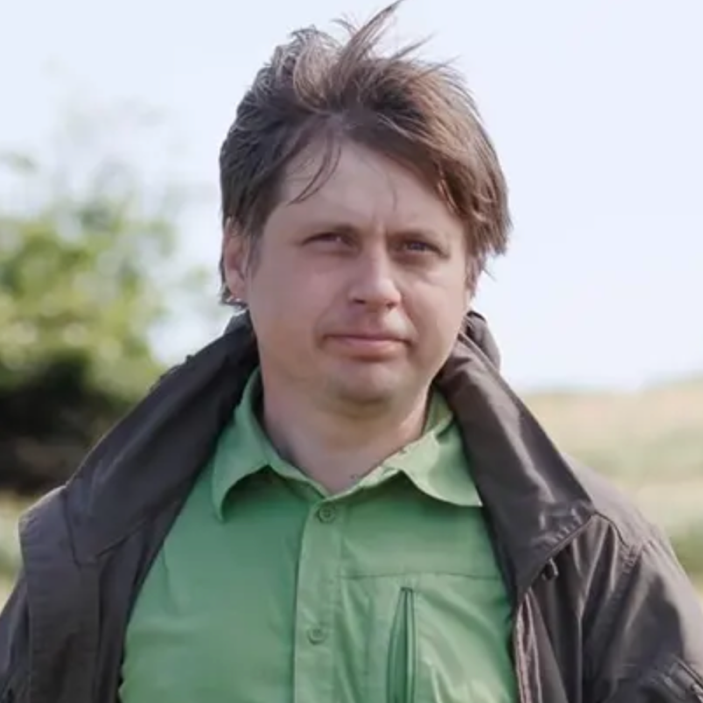
Dr Mikhail Rusin is a researcher at the Rehabilitation and Reintroduction Center for Rare Species at Kyiv Zoo, founder of the Hamster Rescue Center and Chair of the Small Mammals Research and Conservation Center – Ukraine. He is a conservation biologist working on wildlife research and biodiversity conservation. He has been involved in field-based ecological studies focusing on threatened species and habitat monitoring, including work in regions affected by environmental disturbance and conflict. His research activities include collecting and digitising biodiversity data for use in scientific analysis and conservation planning, contributing to broader efforts to improve knowledge on species distributions and ecological change in Eastern Europe.

Dr Nedko Nedyalkov, Associate Professor, curator at the National Museum of Natural History, Bulgarian Academy of Sciences, Bulgaria.
His research focus (taxonomy, morphology, distribution, and conservation) is on small mammals across the Palearctic.
“I’m a scientist whose work focuses mainly on small mammals, particularly insectivores and rodents. I have really broad interests, and I’d like to know as much as possible about the ecology, biology, taxonomy and evolution of the dormice and other creatures I study. Conservation is just part of my job. It’s vital for me to show others that these small creatures are as important as the big emblematic species such as apes, tigers, elephants and rhinoceroses. In fact, I think they deserve even more attention than these well-known animals. Many of our small mammals are so rare and so little is known about them, especially endemic species (which only exist in small areas), that they are exceptionally vulnerable. They could just slowly and quietly disappear before we even identify them.
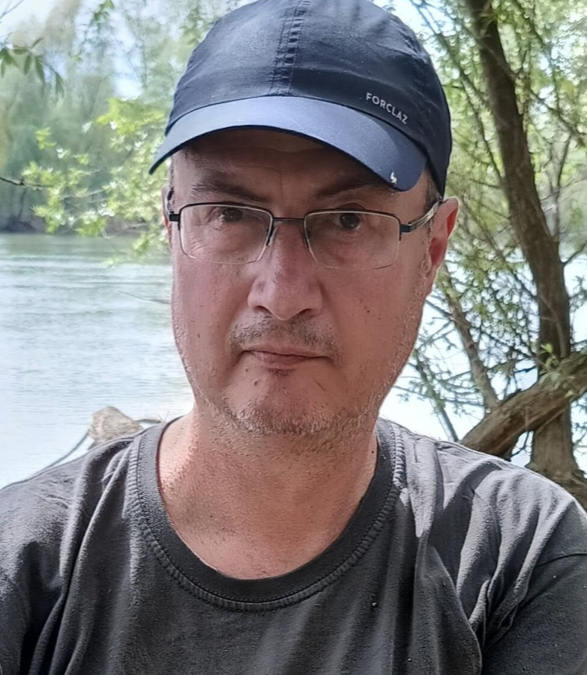
Dr Yordan Koshev, Associate Professor, Institute of Biodiversity and Ecosystem Research, Bulgarian Academy of Sciences, Bulgaria
Yordan Koshev works at the Institute of Biodiversity and Ecosystem Research, Bulgarian Academy of Sciences. Yordan does research in Genetics, Evolutionary Biology and Ecology. Their current project is ‘Analysis of the Adaptation of European Squirrel (Spermophilus citellus) after translocation by studying the level of stress and invasion with endoparasites’.
He is also the Coordinator and Senior therriologist,
overseeing the research and the conservation activities related to the target species of small mammals (Romanian hamster and European ground squirrel) within the LIFE for Falcons project.

Dr Maria Kachamakova, Assistant Professor at the Institute of Biodiversity and Ecosystem Research, Bulgarian Academy of Sciences
Dr Maria Kachamakova is a conservation biologist and expert in small mammal ecology at the Institute of Biodiversity and Ecosystem Research (IBER) at the Bulgarian Academy of Sciences. Her key areas of work and background include terriology (the study of mammals), focusing on the ecology, spatial behaviour, and evolution of small mammals like the European souslik and the Romanian hamster. She has actively participated in fieldwork and translocations for the Life for Falcons and Land for LIFE projects, assessing stress levels and population viability to help endangered species survive in the wild. Her research on topics like souslik dispersion and translocation impacts. She is also the Expert terriologist involved in the planning and implementation of the research and the conservation activities related to the target species of small mammals (Romanian hamster and European ground squirrel) within the LIFE for Falcons project.

Prof. Dr Caroline Habold is a researcher in animal ecophysiology at the Hubert Curien Multidisciplinary Institute (IPHC), affiliated with the CNRS and the University of Strasbourg.
Her research focuses on how rodent species respond to anthropogenic environmental change.
She investigates the evolution of two socio-ecological systems in particular. First, she studies how agricultural intensification has contributed to the decline of the European hamster (Cricetus cricetus), a species emblematic of farmland biodiversity, and explores ways to restore these ecosystems through farming practices that are both hamster-friendly and economically viable for farmers. Second, she examines the factors driving the proliferation of the brown rat (Rattus norvegicus) in urban environments, the associated zoonotic risks, and the management strategies that can support public decision-making. Her work is conducted in collaboration with several international partners, including Hainan University, within the framework of a Franco-Chinese biodiversity research network that she co-leads. She also serves as Deputy Director of the Doctoral School of Life and Health Sciences at the University of Strasbourg and of a CNRS Long-Term Socio-Ecological Research (LTSER) Platform in Strasbourg.
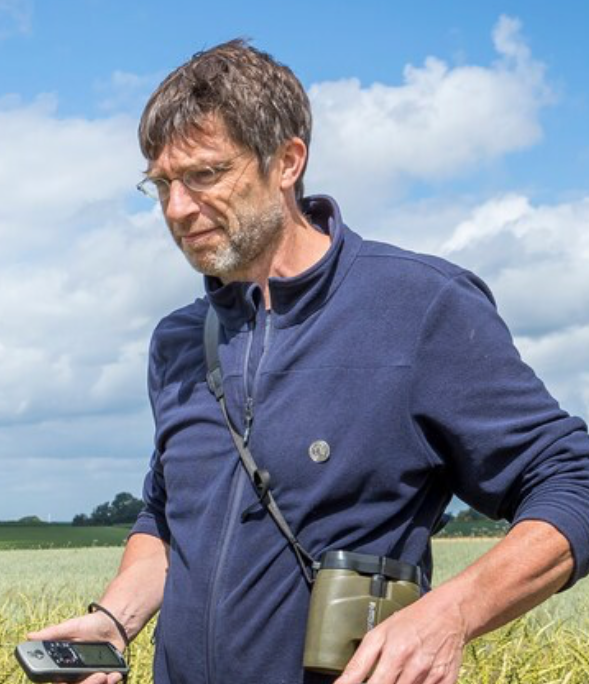
Dr Maurice La Haye, Researcher and Project Leader, Mammal Research Netherlands, The Netherlands
He is a biologist trained at Wageningen University (1997) and obtained his PhD on the European hamster in 2020 at Radboud University Nijmegen. Since 2002, he has worked at the Dutch Mammal Society (since 2026 called Mammal Research Netherlands), with interim positions at the Ministry of Agriculture, Nature and Food Quality, the Province of Limburg, Natuurmonumenten, and Stichting Bargerveen.
He serves as internal coordinator for the Animal Experiments Act and is responsible for permitting under the Environmental Act. He is the team leader of the Land and Marine Mammals Team (LZZ Team) and spokesperson for Wolves in the Netherlands on wolf-related matters.
Maurice has broad expertise in terrestrial mammals and extensive experience with projects involving carnivores (wolf, badger, small mustelids, otter) and rodents (European hamster, root vole, hazel dormouse, garden dormouse). He is also interested in large game species, game management, and African Swine Fever (ASF).
Dr Csongor Gedeon – PhD in Biology-Ethology, Senior Researcher at the Institute for Soil Sciences, HUN-REN Centre for Agricultural Research
Csongor is a conservation ecologist interested in studying the population dynamics of burrowing mammals and developing non-destructive methods to estimate their abundance or digging activity (subsurface mapping) by combining proximal sensing and statistical tools. His research has a particular emphasis on using research results in on-the-ground conservation of endangered burrowing mammals. Thesis announcer at the Doctoral School of Environmental Sciences at Eötvös Loránd University, Budapest.
He has worked in nature conservation as a national park ranger and wildlife manager and has held research positions at Northern Arizona University, the University of Vienna, Kyoto University, and Dickinson State University. Supported by international grants and scholarships, including Fulbright, ÖAD, JSPS, and ESF funding, he has conducted research and teaching across Europe, North America, and Asia. His recent work includes teaching as a Fulbright Scholar-in-Residence at the University of Dubuque (2023–24) and collaborative research on mole-rats in Albania and Scotland (2025).